Solar

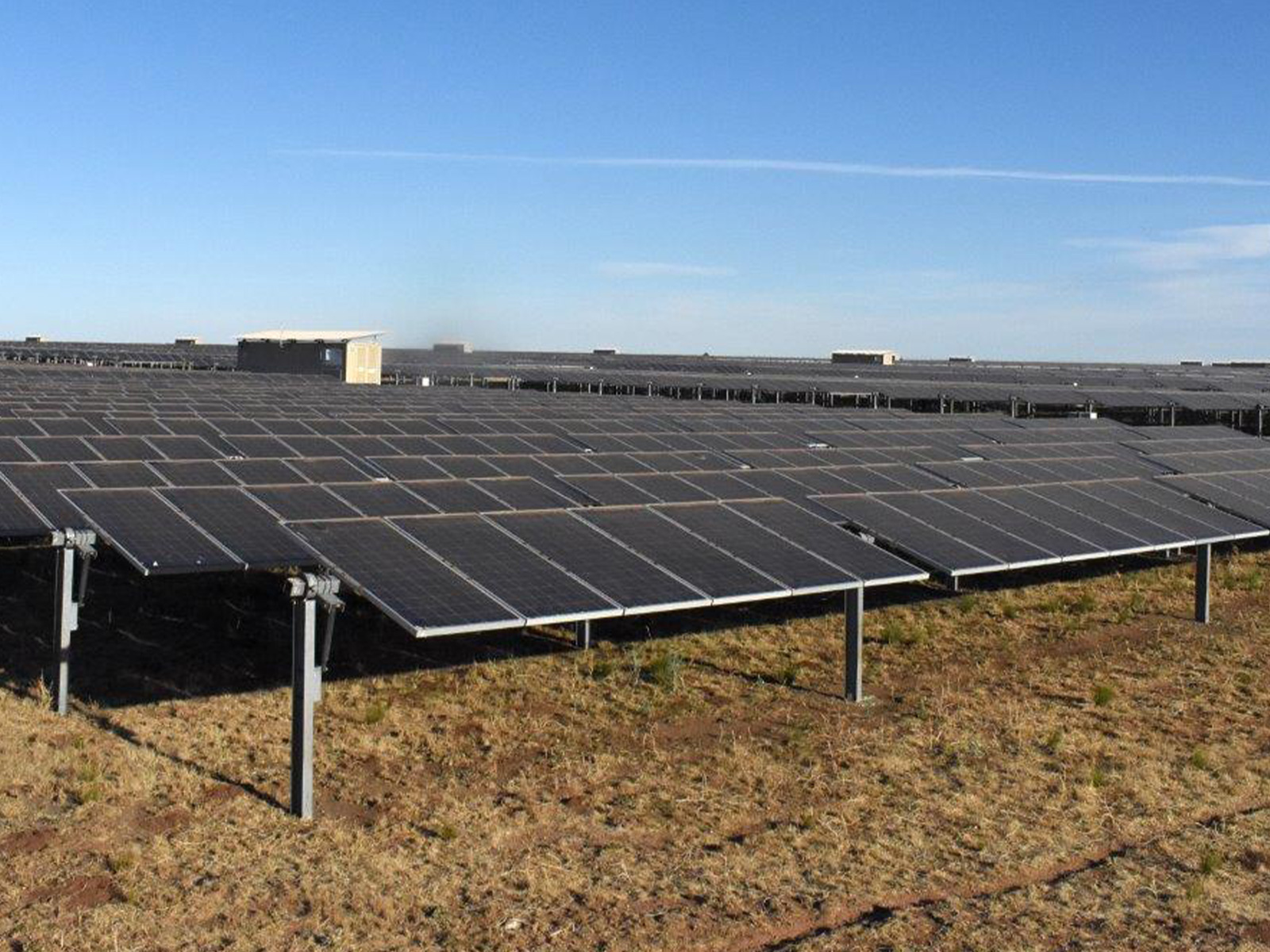
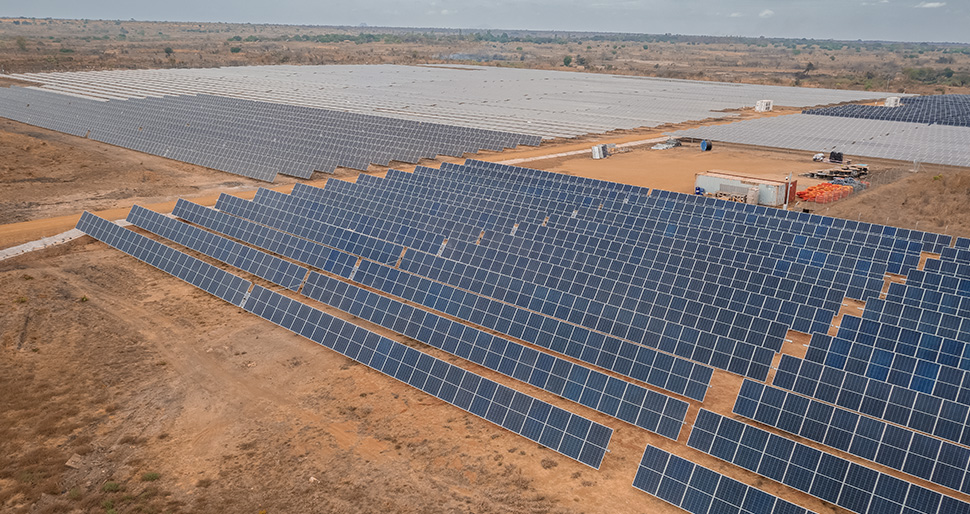
Globeleq operates 6 solar PV plants in South Africa, two in Egypt, one in Kenya, and is building an additional 27MW in Zambia (manged by LHPC, Globeleq’s majority owned entity).  Globeleq is working to deliver new low carbon electricity in Africa. Solar power is essential to this growth given the high solar resources across the continent.

The sun produces more than enough energy to provide us with all our energy needs, but technology in the form of solar panels or photovoltaic (PV) modules is required to make it usable.

Like solar panels on rooftops, hand-held calculators and even spacecraft, PV cells are made of two layers of semiconductor material, usually silicon.

Electrons in the material are displaced when sunlight hits the solar cells. The voltage produced can drive a direct current, with one side of the cell receiving a negative charge and the other receiving a positive charge. When a circuit connects the two sides, the electrons flow, producing electricity.

Connecting several solar cells electrically to each other and mounting them in a frame makes a solar panel (photovoltaic module). The modules are connected in arrays, and the direct current (DC) generated is carried through wiring to an inverter, which converts the direct current (DC) to alternating current (AC).

Wind

Globeleq operates the Jeffreys Bay Wind Farm and the Klipheuwel Wind Farm, both in South Africa

Globeleq is working to deliver new low carbon electricity in Africa.  There are many areas where the wind resources are high and where feasible, we intend to use this technology to build more capacity.

Wind energy is one of the oldest forms of energy generation. Several factors, including vegetation, surface water and topography, determine wind speed, intensity, direction, and duration. Wind turbines are erected in areas that are suited to harnessing prevailing winds.

In the process, the kinetic energy generated by the movement of the blades is converted into mechanical energy, which is then turned into electrical energy by the wind turbine. This is transported to the electricity grid.

By its very nature, the wind varies and only sometimes blows consistently. This is why the location of wind turbines is so important. Erecting them in an area with prevailing winds ensures that the turbines can generate energy about 90 percent of the time.

When the wind speed reaches around four metres per second, the turbine blades will spin up to their operating speed, usually around 14 to 29 rpm (depending on the turbine model) and start generating electricity.

As the wind speed increases, so does the generator output, reaching a maximum capacity. The generator output will remain at this maximum capacity even if the wind speed increases. However, at the cut-out wind speed, usually around 25 metres per second, the turbine will shut down to avoid damage.

HFO

Globeleq’s peaking Dibamba Power Plant operates on Heavy Fuel Oil (HFO) 

An HFO power plant is a combustion engine that uses HFO as the primary fuel (sometimes using light fuel oil (LFO) as backup fuel), generators and the auxiliary equipment needed for power production.

The engine and the generator together constitute a generating set. The auxiliary equipment is mainly mounted on modular units. The engines have closed-circuit cooling water systems with cooling radiators installed outside the powerhouse.

The thermal engine converts thermal energy produced by the combustion of a mixture of air and HFO/diesel supplied in volumes, temperatures and pressures controlled by a semi-automated servo system into mechanical power.

This power is transmitted using the engine’s shaft and converted into electrical energy by a three-phase synchronous generator.

Hydro

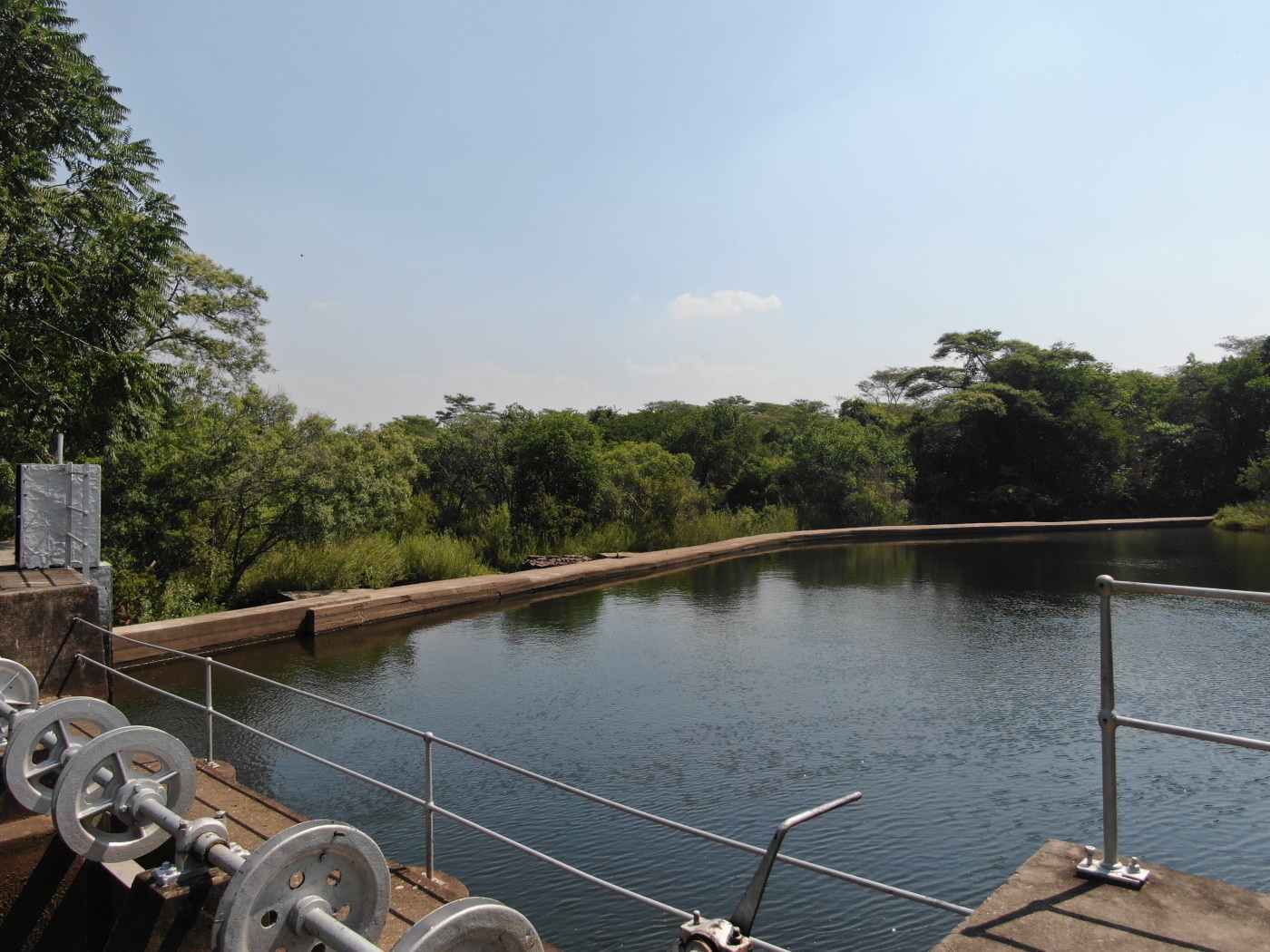
Through its majority owned Lunsemfwa Hydro Power Company Limited, an independent hydro-electric power producer based in Kabwe, Zambia, it has two power stations – the Mulungushu Power Station and Lunsemfwa Power Station.

These hydro plants use a simple form of hydropower technology in that they rely on water stored behind a dam or flowing in a river to move through large pipes which spin turbines connected to generators. As the moving water turns the turbines, the generators convert that mechanical energy into electricity, which is then sent to the grid. In short, they use the natural force of falling or fast‑moving water to produce clean, renewable power with no fuel burning involved.

Geothermal

Globeleq is constructing its first geothermal plant at Menengai in Kenya

Geothermal power plants generate electrical energy by the use of  the Earth’s core internal thermal energy called geothermal energy in a known geothermal reservoir.

Flash steam plants are the most common type of geothermal power plants in operation today and is the same technology as Globeleq’s Menengai 35 MW geothermal plant currently in construction.

Pressurized high-temperature water drawn from a production well drilled into a known geothermal reservoir beneath the surface (to a depth of 3 km) to containers at the surface, (flash tanks), where the sudden decrease in pressure causes the liquid water to “flash,” or vaporise, into steam. The steam is then allowed to expand rapidly and provide rotational or mechanical energy to turn the turbine- generator set in the plant to generate electrical energy.

The generated electrical energy is then transmitted over transmission and distribution power lines to homes, buildings, and businesses.

After the vapour passes through the turbine, it is condensed and piped back to an injection well to return the used geothermal fluids back to the geothermal reservoir after energy extraction. Re-injection is done for environmental considerations including benefits to the geothermal reservoir by maintaining reservoir pressure.

Geothermal energy is a renewable energy source because it comes from earth’s core which continuously produces heat stored in rocks and fluids.

Battery Energy Storage

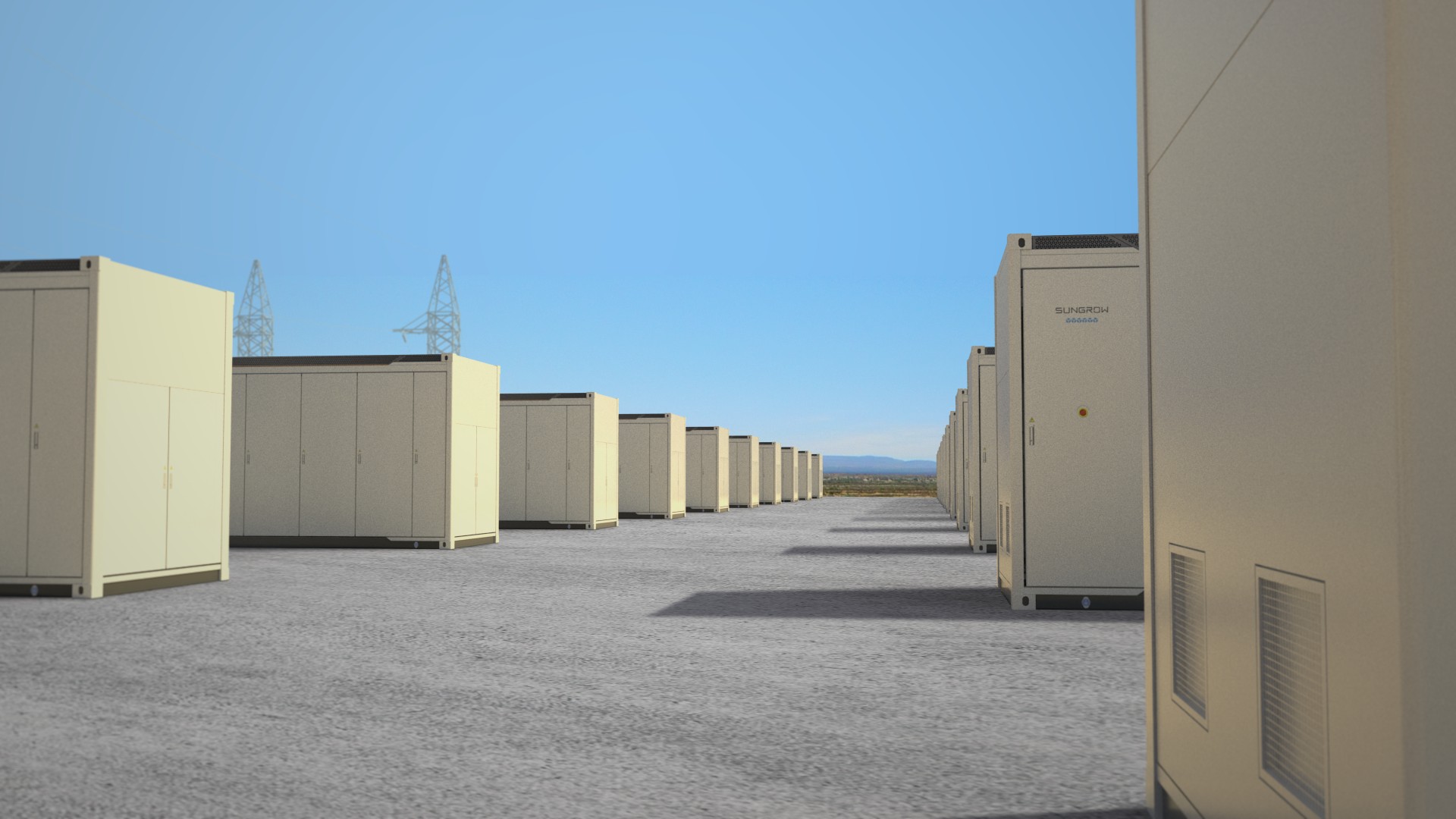
Globeleq is constructing its first standalone battery energy storage system in South Africa – currently the largest one in construction in Africa.

Battery energy storage systems are increasingly becoming another asset in the electricity network operator’s portfolio to help manage the delicate balance of national transmission networks. As the deployment of variable renewable energy systems (such as wind and solar generating units) increases, it calls for a more flexible energy system to ensure that these variable renewable energy generators are integrated in an efficient and reliable manner.

Battery energy storage systems are emerging to play an important role to support the increased integration of variable renewable energy generation through their unique capability to absorb, store and reinject electricity into the system. Batteries can provide multiple functions from smoothing the irregular generation profile of a wind plant, to storing excess solar energy during the day and dispatching at night when there may be higher electricity demand as well as providing a collection of further network support functions that are invaluable to network operators.

Gas

Globeleq is a leader in gas-fired generation in Africa. Azito, Kribi Power and Songas all use natural gas to produce electricity. In Mozambique we are constructing the Central Termica de Temane 450MW plant.

A gas turbine compresses air and mixes it with fuel in the combustion chamber. The air/fuel mixture is burned in the combustion chamber at high temperatures. The hot exhaust gases are expanded through the turbine blades, making the rotor turn and drive the compressor and the generator. This generates electrical energy by transforming the rotating mechanical energy.

Gas turbines:

  • Can supply reasonably large amounts of power compared to their size (high energy density).
  • Have a long life with low maintenance cost per MWh generated.
  • Can be brought online to peak production levels in a relatively short time (less than one hour)
  • Use a wide range of fuels but have more severe constraints on impurities.

Combined cycle gas turbines

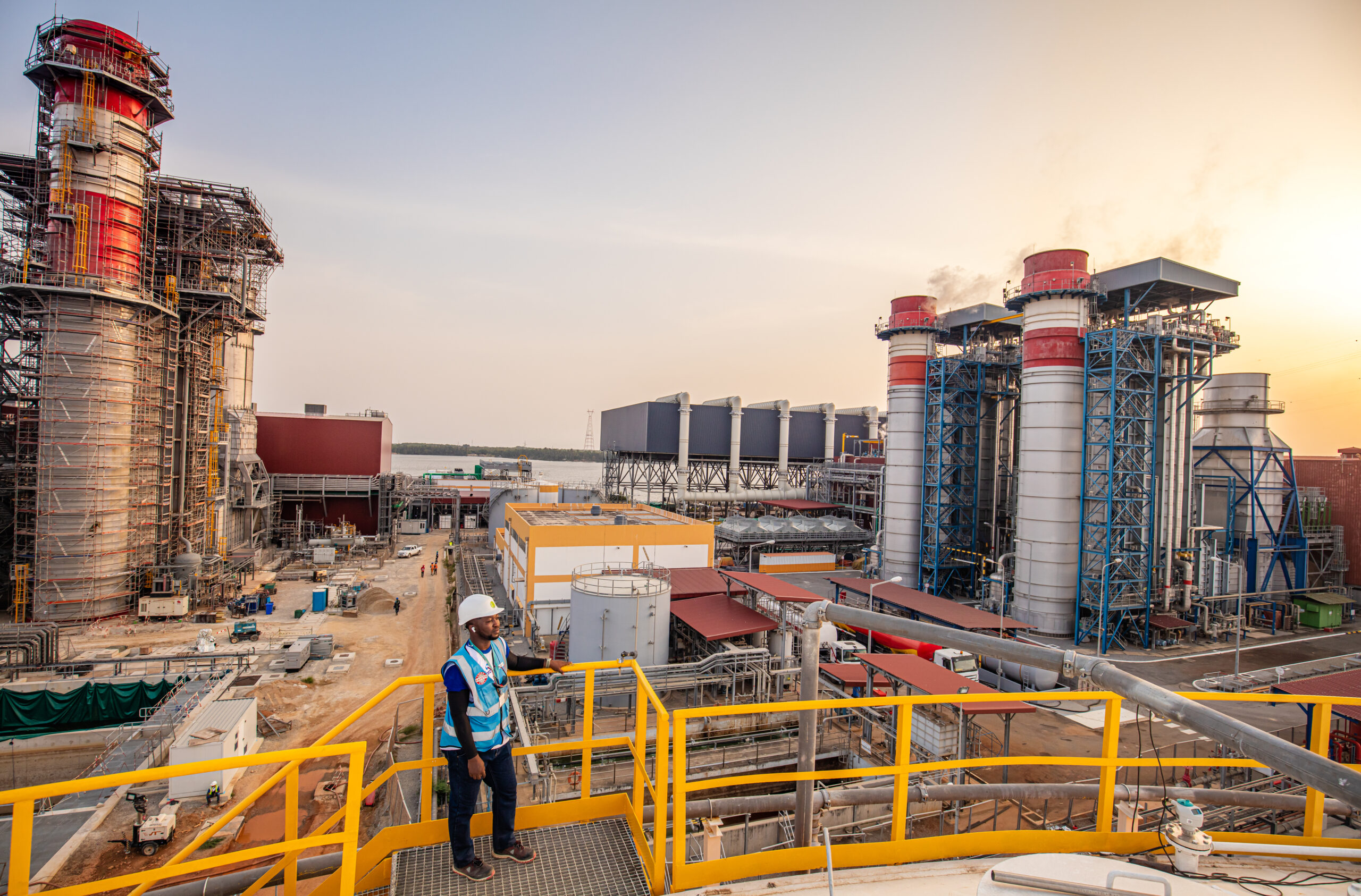
A combined-cycle power plant uses gas and steam turbines to produce up to 20 percent more electricity from the same fuel than a traditional open-cycle gas turbine plant. The waste heat from the gas turbine is used to generate steam for a steam turbine, which generates extra power.

The gas turbine compresses air and mixes it with fuel in the combustion chamber. The air/fuel mixture is burned in the combustion chamber at high temperatures. The hot exhaust gases are expanded through the turbine blades, making the rotor turn and drive the compressor and the generator. The generator thus generates electrical energy by transforming the rotating mechanical energy. The heat from the exhaust gases of the gasturbine(s) is then used to generate steam in a so-called Heat Recovery Steam Generator (HRSG).

The steam from the HRSG is expanded in the turbine, and its generator converts the mechanical energy into electrical energy. The electrical energy from all generators is passed through the main transformers before being delivered to the electrical transmission network.

Aeroderivative gas-fired turbines

Aeroderivative gas-fired turbines are lighter in weight than classic gas turbines and have been derived from aircraft engines. They have the same working principle as standard gas turbines and can be used in open or combined-cycle processes.

Natural gas-fired reciprocating engines

Natural gas-fired reciprocating engines are also commonly known as combustion engines. They convert the fuel energy to mechanical energy, which rotates a piston to generate electricity.